How to Crack MHT CET 2026 in First Attempt – The Ultimate Guide

TwinSparkTech
January 2026 · 10 min read
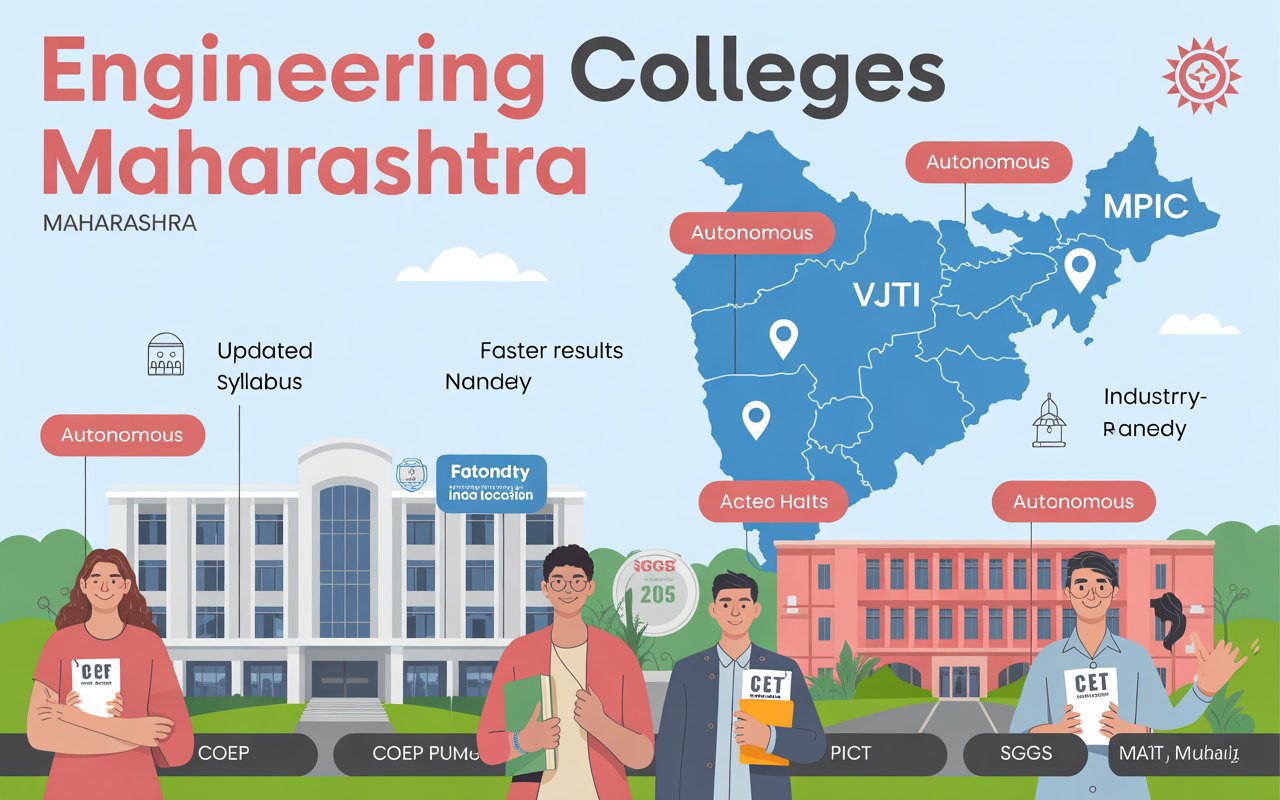
Your roadmap to cracking MHT CET 2026 on the very first try
Over 10 lakh students appear for MHT CET every year — but only a fraction crack it in their first attempt with 95+ percentile. What separates them from the rest? Strategy, consistency, and smart preparation. This guide covers everything you need to know.
Why First Attempt Matters
Cracking MHT CET 2026 in the first attempt gives you a massive advantage. You avoid the pressure of a second attempt, save an entire year, and can focus on your engineering journey sooner. With 10L+ registrations expected in 2026 and cutoffs rising 2–5% for top branches like CSE and IT, there's no room for a "wait and see" approach.
Why This Topic Matters
Most students waste their first attempt due to poor planning. They study hard but not smart. Understanding the exam pattern, subject weightage, and past trends gives you a decisive edge — and that's exactly what this guide delivers.
Key Insights to Know Before You Start
- 🎯 MHT CET 2026 is based on the Maharashtra State Board (Class 11 + 12) syllabus.
- 📋 Exam has 3 papers: PCM (Physics, Chemistry, Maths) — each carries 100 marks.
- ⏱ Total time: 90 minutes per paper. No negative marking.
- 📈 2026 registrations expected to cross 10 lakh — up 15% from 2024.
- 🏆 99+ percentile is needed for CSE at COEP or VJTI. 85+ percentile is safe for mid-tier Pune colleges.
- 🔁 No limit on attempts — but cracking it in the first go saves a year.
- 📍 Home University quota benefits Maharashtra-domicile students significantly.
Important Data & Numbers
| Score Range (out of 200) | Approx. Percentile | College Tier |
|---|---|---|
| 180–200 | 99+ percentile | COEP, VJTI |
| 160–179 | 96–99 percentile | PICT, SPIT, DY Patil (Akurdi) |
| 130–159 | 90–96 percentile | PCCOE, MCOE Pune |
| 100–129 | 80–90 percentile | Mid-tier Pune/Nagpur colleges |
| Below 100 | Below 80 percentile | Limited options, suburbs/rural |
Subject-Wise Trends (2023–2025)
Understanding which subjects and topics carry the most weight is critical for first-attempt success.
- Mathematics: Highest scorer subject. Calculus, Algebra, and Coordinate Geometry dominate. Contributes 40–45% of your total score impact.
- Physics: Mechanics, Electrostatics, and Modern Physics are high-weightage chapters. Moderate difficulty.
- Chemistry: Organic Chemistry is a must-master. Physical Chemistry (Electrochemistry, Thermodynamics) often appears tricky.
- Trend: 2025 saw Maths difficulty increase while Chemistry was moderate. 2026 is expected to follow a similar pattern.
⚠️ Common Mistakes First-Timers Make
- ❌ Ignoring Class 11 syllabus — approximately 40% of questions come from it.
- ❌ Not attempting mock tests regularly — accuracy suffers without practice.
- ❌ Focusing too much on JEE and missing CET-specific pattern preparation.
- ❌ Skipping NCERT/State Board fundamentals and jumping to advanced books.
- ❌ Poor time management during the actual exam — spending too long on one question.
- ❌ Not tracking weak areas — preparing without a gap analysis plan.
✅ Proven First-Attempt Strategies
1. Start with the Syllabus Blueprint
Download the official MHT CET 2026 syllabus from mahacet.org. Map every chapter across Physics, Chemistry, and Maths. Divide chapters into High, Medium, and Low priority based on previous year paper analysis.
2. Follow the 60-20-20 Rule
Allocate your daily study time as: 60% on new concepts, 20% on revision, and 20% on practice/mock tests. This ensures you're always building, reinforcing, and applying knowledge.
3. Complete Full-Length Mocks Every Week
Students who attempt at least 1 full-length mock test per week score on average 15–20% higher in the actual exam. Track your accuracy and speed after each mock.
4. Target 85% Accuracy Over Speed
In CET, there's no negative marking — but attempting randomly hurts your confidence and time. Aim for 85%+ accuracy. You need roughly 130–150 correct answers to reach 90–95 percentile.
5. Use Predictor Tools Post-Result
After results, use platforms like predictcollege.in to estimate your college options before CAP Round 1 opens. This lets you prepare your document list and choice list strategically.
Expert Tips for First Attempt Success
- 💡 Study 6–8 hours daily in the last 3 months before the exam.
- 💡 Give equal attention to Class 11 and Class 12 chapters — don't neglect either.
- 💡 Solve the last 5 years of MHT CET papers under timed conditions.
- 💡 Join a study group — discussing problems helps you retain better.
- 💡 Sleep 7–8 hours and avoid all-nighters — memory consolidation happens during sleep.
- 💡 In the last 2 weeks, do only revision and mocks — no new topics.
Realistic Study Hours Breakdown
| Student Type | Daily Study Hours | Mocks Per Week | Expected Percentile |
|---|---|---|---|
| Topper (99ile) | 8–10 hours | 2–3 full mocks | 99+ |
| Consistent (95ile) | 6–8 hours | 1–2 full mocks | 90–99 |
| Average (80ile) | 4–5 hours | 1 mock/week | 75–85 |
Conclusion
Cracking MHT CET 2026 in the first attempt is absolutely achievable with the right strategy. Focus on your basics, practice mocks consistently, manage your time wisely, and avoid the common mistakes most students make. Remember — it's not about studying more, it's about studying smarter.
"The exam doesn't test how much you studied. It tests how well you prepared."
🚀 Ready to Crack CET 2026?
Use TwinSparkTech's free Study Tracker to plan your preparation, track progress, and stay consistent every single day.
Start Tracking Now →