Why ECE is the New CSE: Semiconductor Boom in Maharashtra 2026

TwinSpark Team
March 07, 2026 • 8 min read
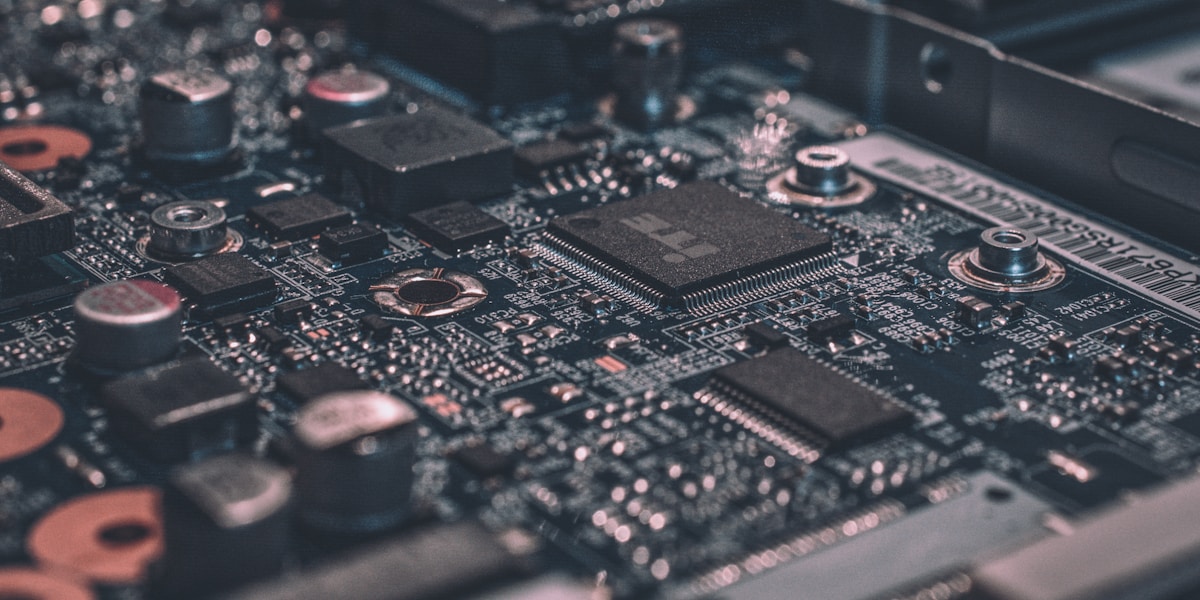
The engineering landscape in India is witnessing a seismic shift. While Computer Science Engineering (CSE) has dominated placement statistics and student preferences for over a decade, Electronics & Communication Engineering (ECE) is making a powerful comeback. The catalyst? Maharashtra's explosive semiconductor manufacturing boom that's creating jobs faster than colleges can produce graduates.
If you're filling out your MHT-CET preference list in 2026 and still considering ECE as a "backup option," you're about to make a costly mistake. The semiconductor revolution isn't coming — it's already here, and ECE graduates are at the center of India's most ambitious industrial transformation.
The Game-Changing Numbers
₹76,000 crore investment announced for semiconductor manufacturing in Maharashtra alone
50,000+ direct jobs expected by 2028 in chip design and manufacturing
₹15-25 LPA starting packages for ECE graduates in semiconductor companies
3x shortage of qualified ECE engineers compared to industry demand
The Semiconductor Gold Rush in Maharashtra
Maharashtra isn't just participating in India's semiconductor story — it's writing it. The state government has approved three major semiconductor fabrication plants in the past year, with two located in the Pune-Mumbai industrial corridor and one in Nagpur's MIHAN zone.
These aren't small assembly units. We're talking about full-scale chip fabrication facilities comparable to those in Taiwan and South Korea. Tata Electronics' ₹91,000 crore semiconductor fab in Dholera will source 40% of its engineers from Maharashtra colleges. Micron Technology's ₹22,500 crore ATMP facility in Sanand has already begun campus recruitment drives across Pune and Mumbai engineering colleges.
Major Semiconductor Plants in Maharashtra
Game-changing facilities transforming ECE careers
-
Tata Semiconductor Assembly & Test Facility, Jafrabad: 5,000 direct jobs, targeting ECE/EE graduates from Tier-2 colleges
-
CG Power's Chip Packaging Unit, Pune: 3,500 engineers needed by Dec 2026, hiring from COEP, VIT Pune, MIT
-
ISMC's 65nm Fab, Dindori (MIHAN): India's first commercial fab, 8,000 technical positions planned
Why CSE Students Are Now Competing for ECE Skills
Here's an irony that would have been unthinkable five years ago: top CSE students are now enrolling in semiconductor design bootcamps to make themselves relevant for chip companies. The reason? Hardware is eating software's lunch.
Every AI breakthrough — from ChatGPT to autonomous vehicles — is fundamentally limited by chip performance. Companies are realizing that optimizing algorithms is pointless if you're running them on outdated silicon. This has created explosive demand for engineers who understand both digital design and fabrication processes — classic ECE territory.
The Skills Gap Reality
India currently produces around 15,000 ECE graduates annually from top colleges. The semiconductor industry alone needs 25,000 engineers per year. Simple math says ECE graduates have negotiating power that CSE students haven't seen since 2010.
| Skill Domain | Average Package (2026) | Job Openings | Primary Branch |
|---|---|---|---|
| VLSI Design & Verification | ₹18-28 LPA | 12,000+ | ECE |
| Analog IC Design | ₹22-35 LPA | 4,500+ | ECE |
| Embedded Systems (IoT/Automotive) | ₹14-22 LPA | 18,000+ | ECE |
| RF & Wireless Communication | ₹16-26 LPA | 7,500+ | ECE |
| Semiconductor Process Engineering | ₹20-32 LPA | 6,000+ | ECE/Chem |
| Software Development | ₹12-20 LPA | 45,000+ | CSE/IT |
Pro Tip for MHT-CET 2026 Students
If you're scoring 95+ percentile in MHT-CET, consider ECE at COEP/VJTI over CSE at lower-tier colleges. Semiconductor companies recruit heavily from these institutes, and ECE from a Tier-1 college now commands better packages than CSE from Tier-2/3 colleges. Use our College Predictor Tool to compare realistic placement outcomes across branches.
The Maharashtra Advantage: Location Matters More Than Ever
Not all ECE degrees are created equal in 2026. Maharashtra students have a geographic advantage that's worth understanding when filling your preference form.
Semiconductor fabs require massive infrastructure, stable power supply, and proximity to ports. Maharashtra checks all boxes, which is why global giants are choosing Pune-Mumbai corridor over Bangalore or Hyderabad for their next facilities.
Why Maharashtra Colleges Have the Edge
- Industry-Academia Partnerships: COEP has signed MoUs with Micron and Applied Materials for curriculum design
- Internship Pipelines: Tata Semiconductor offers 6-month paid internships exclusively to Maharashtra ECE students
- State Subsidies: Maharashtra government sponsors advanced VLSI training for top 30% ECE students
- Recruitment Preference: Local hiring mandates require 60% of workforce to be from Maharashtra colleges
ECE Placement Reality Check: Beyond the Hype
Let's be brutally honest — not every ECE graduate lands a ₹25 LPA package at a semiconductor company. The reality is more nuanced, and understanding it will help you make a better decision.
The Tier-1 College Scenario
At top Maharashtra colleges (COEP, VJTI, PICT, VIT Pune), ECE placements have genuinely transformed. Average packages have jumped from ₹6-8 LPA in 2021 to ₹12-15 LPA in 2026. Semiconductor companies now account for 35-40% of ECE placements, compared to just 12% five years ago.
The Tier-2/3 College Reality
If you're joining a lower-ranked college, ECE still offers better long-term prospects than CSE, but you'll need to work harder. Core semiconductor companies rarely visit Tier-3 campuses. You'll need to:
- Complete industry-recognized certifications (Cadence, Synopsys, Mentor Graphics)
- Build a strong portfolio of Verilog/VHDL projects on GitHub
- Target service companies (TCS, Infosys, Wipro) initially, then lateral switch
- Use off-campus placement drives and LinkedIn networking aggressively
Reality Check
ECE is harder than CSE. The curriculum includes heavy mathematics, physics, and lab work. If you struggled with 12th-grade Physics or hate practical work, CSE might be a better fit regardless of placement statistics. Choose based on aptitude first, placements second. A mediocre ECE graduate earns less than a good CSE graduate — always.
Top Semiconductor Recruiters Hiring ECE Graduates in 2026
The companies leading Maharashtra's semiconductor boom are household names globally, but many Indian students haven't heard of them yet. Here's who's actually hiring:
Core Semiconductor Companies
Design & Verification
- • Qualcomm (₹18-24 LPA)
- • Intel India (₹16-28 LPA)
- • NVIDIA (₹22-35 LPA)
- • ARM (₹20-30 LPA)
- • Broadcom (₹18-26 LPA)
Manufacturing & Testing
- • Tata Electronics (₹12-18 LPA)
- • Micron Technology (₹14-22 LPA)
- • Applied Materials (₹15-25 LPA)
- • ISMC (₹13-20 LPA)
- • Foxconn Semiconductors (₹11-16 LPA)
The 5G and IoT Multiplication Effect
The semiconductor boom isn't happening in isolation. India's 5G rollout and exploding IoT sector are creating parallel demand for ECE skills that CSE graduates simply don't possess.
Reliance Jio alone plans to deploy 500 million IoT devices by 2028. Each device needs custom chip design, RF optimization, and power management — all core ECE subjects. Telecom infrastructure companies like Nokia, Ericsson, and Samsung are expanding Indian R&D centers specifically to hire ECE graduates for 5G network optimization.
Embedded Systems: The Hidden Goldmine
While everyone talks about semiconductors, embedded systems is the quieter success story for ECE graduates. The automotive industry's shift to electric vehicles has created insatiable demand for embedded engineers. Companies like Bosch, Continental, and Tata Motors are offering ₹14-20 LPA packages for ECE students with strong C/C++ and microcontroller skills.
How to Prepare for ECE Success (Even Before College)
If you've decided on ECE, you can get a head start while waiting for MHT-CET counseling results. Here's a practical roadmap:
Pre-College Preparation Checklist
-
1. Master Digital Logic Fundamentals
Take the free Nand2Tetris course — it teaches you to build a computer from scratch using logic gates
-
2. Learn Basic Verilog/VHDL
Download Xilinx Vivado (free student version) and complete 10 simple projects before semester 1
-
3. Build Arduino/Raspberry Pi Projects
Hardware tinkering beats theoretical knowledge — build 3-4 working prototypes
-
4. Strengthen Math & Programming
ECE requires both. Do Python basics + revise 12th Calculus, Differential Equations
-
5. Join ECE LinkedIn Communities
Follow VLSI professionals, join "ECE Students India" groups, understand industry trends early
The CSE vs ECE Decision Matrix for MHT-CET 2026
After counseling thousands of students, we've identified clear patterns for when to choose each branch. Use this decision framework:
| Your Profile | Recommended Branch | Key Reason |
|---|---|---|
| 95+ percentile, Tier-1 college guaranteed | ECE or CSE (both excellent) | Top colleges + semiconductor boom = peak opportunities in both |
| 90-95 percentile, good college likely | ECE (slight edge) | Less competition, focused placement drives, manufacturing jobs opening |
| 80-90 percentile, Tier-2/3 college expected | CSE (practical choice) | More off-campus opportunities, self-learning easier, service companies hire in bulk |
| Love hardware, hate coding | ECE (obvious) | Play to your strengths — passion matters more than trends |
| Love coding, hate physics/circuits | CSE (obvious) | Don't force yourself into ECE for placements if you'll struggle academically |
| Want entrepreneurship/startup path | CSE (better ecosystem) | Software startups easier to launch with lower capital |
| Want stable corporate career (R&D focus) | ECE (better fit) | Manufacturing/hardware companies offer more job security, less layoff risk |
Final Verdict: Should You Choose ECE in 2026?
The answer depends on three factors: your aptitude, your college rank, and your career priorities.
Choose ECE if: You're genuinely interested in how things work at the hardware level, you're joining a Tier-1 or strong Tier-2 college, and you're willing to put in the lab hours and mathematical rigor the branch demands. The semiconductor boom is real, the opportunities are massive, and early movers will benefit most.
Choose CSE if: You prefer software and abstract problem-solving, you're risk-averse and want the widest possible job market, or you're joining a college with weak ECE placement infrastructure. CSE isn't dying — it's just getting more competitive.
The middle path: Some colleges offer specializations like "ECE with VLSI" or dual degrees. These can be smart choices if you want to keep both hardware and software doors open.
The Bottom Line
ECE isn't the "new CSE" — it's becoming its own powerhouse driven by India's manufacturing renaissance. The students who will benefit most are those choosing it deliberately, not desperately. Maharashtra's semiconductor boom is a genuine game-changer, but it rewards prepared minds who understand both the opportunity and the effort required.
Don't let anyone tell you there's a universally "better" branch. The best branch is the one that aligns with your strengths, your college's infrastructure, and the effort you're willing to invest. The semiconductor boom makes ECE incredibly attractive in 2026, but only for students who are ready to seize it.
Still Confused About Branch Selection?
Use our free MHT-CET College Predictor, Cutoff Analyzer, and Branch Comparison Tools to make data-driven decisions for your engineering future.
🎯 Explore Free Tools →